The early days of football and the heroes who made it great
A Fair Use Excerpt
by
ALLISON DANZIG
The Macmillan Company, New York
copyright 1971
PRESIDENT THEODORE ROOSEVELT’S DEFENSE OF FOOTBALL
The year 1905 was a black one for college football. With its mass, momentum, close order plays, the game had become nothing more than a test of brute force, and there were so many fatalities and serious injuries that there was a swelling public outcry and demands for the abolition of the sport. The Chicago Tribune reported 18 deaths and 159 more or less serious injuries for the year. At Columbia College, the faculty abolished the game, and it was 10 years before it was resumed there. Other colleges suspended play for a year. Stanford in California abandoned football for rugby. President Theodore Roosevelt, a strong believer in the values of football, stepped into the breach, summoning representatives of Yale, Harvard, and Princeton to the White House. He called on them to save football by removing its brutalizing features. Brutalizing and foul play, he declared, should receive the same summary punishment given to a man who cheats at cards.”
…
President Roosevelt, a Harvard graduate, spoke at the Harvard Union in Cambridge, Massachusetts, on February 20-third, 19 o7 His remarks, in part, as printed in Morris A. Bealle’s History of football at Harvard, published in 1948, follow.
In speaking here at Harvard Union, I wish to say first a special word as one Harvard man to his fellow Harvard men. I feel that we can none of us ever be sufficiently grateful to Major Higginson for having founded this Harvard union, because each loyal Harvard man should do all he can to foster in Harvard that spirit of real democracy which will make Harvard men feel the vital sense of solidarity so that they can all join to work together in the things that are of most concern to the college.
It is idle to expect, nor indeed would it be desirable, that there should be in Harvard a uniform level of taste and association. Some men will excel in one thing and some in another; some in the things of the body, some in the things of the mind; and when thousands are gathered each will naturally find some group of especially congenial friends with whom he will form ties of peculiar social intimacy.
These groups-athletic, artistic, scientific, social-must inevitably exist. My plea is not for their abolition. My plea is that they shall be got into the right focus in the eyes of college men; that the relative importance of the different groups shall be understood when compared with the infinitely greater life of the college as a whole.
Let each man have his special associates, his special interests, his special studies and pursuits, but let him remember that he cannot get the full benefit of life in college if he does nothing but specialize, and what is even more important, he cannot do full duty by the college unless his first and greatest interest is in the college itself, in his associates taken as a mass, and not in any small group.
One reason why I so thoroughly believe in the athletic spirit at Harvard is because the athletic spirit is essentially democratic. Our chief interest should not lie in the great champions in sport. On the contrary, our concern should be most of all to widen the base, the foundation in athletic sports, to encourage in every way a healthy rivalry which shall give to the largest possible number of students the chance to take part in vigorous outdoor games.
It is of far more importance that a man shall play something himself, even if he does it badly, than he shall go with hundreds of companions to see someone else play well, and it is not healthy for either students or athletes if the teams are mutually exclusive. But even having this aim especially in view, it seems to me we can best attain it by giving proper encouragement to the champion in the sports, and this can only be done by encouraging intercollegiate sport.*
As I emphatically disbelieve in seeing Harvard or any other college turn out mollycoddles instead of vigorous men, I may add that I do not in the least object to sport because it is rough. Rowing, baseball, lacrosse, track and field games, hockey, football, are all of them good. Moreover, it is to my mind simple nonsense, a mere confession of weakness, to desire to abolish a game because tendencies show themselves, or practices grow up which prove that the game ought to be reformed. Take football for instance.
The preparatory schools are able to keep football clean and to develop the right spirit in the players, without the slightest necessity ever arising as to so much considering the question of abolishing it, there is no excuse whatever for colleges failing to show the same capacity, and there is no real need for considering the question of the abolition of the game.
If necessary, let the college authorities interfere to stop any excess or perversion, making their interference as little officious as possible, and yet as rigorous as is necessary to achieve the end. But there is no justification for stopping a thoroughly manly sport because it is sometimes abused. When the experience of every good preparatory school shows that the abuse is in no shape necessarily attendant upon the game.
We cannot afford to turn out of college men who shrink from physical effort or from a little physical pain. In any republic, courage is a prime necessity for the average citizen, if he is to be a good citizen, and he needs physical courage no less than moral courage, the courage that dares as well as the courage that endures, the courage that will fight valiantly alike against the foes of the soul and the foes of the body.
Athletics are good, especially in their rougher forms, because they tend to develop such courage. They are good also because they encourage a true democratic spirit. For in the athletic field, the man must be judged not with reference to outside and accidental attributes, but to that combination of bodily vigor and moral quality, which go to make up prowess.
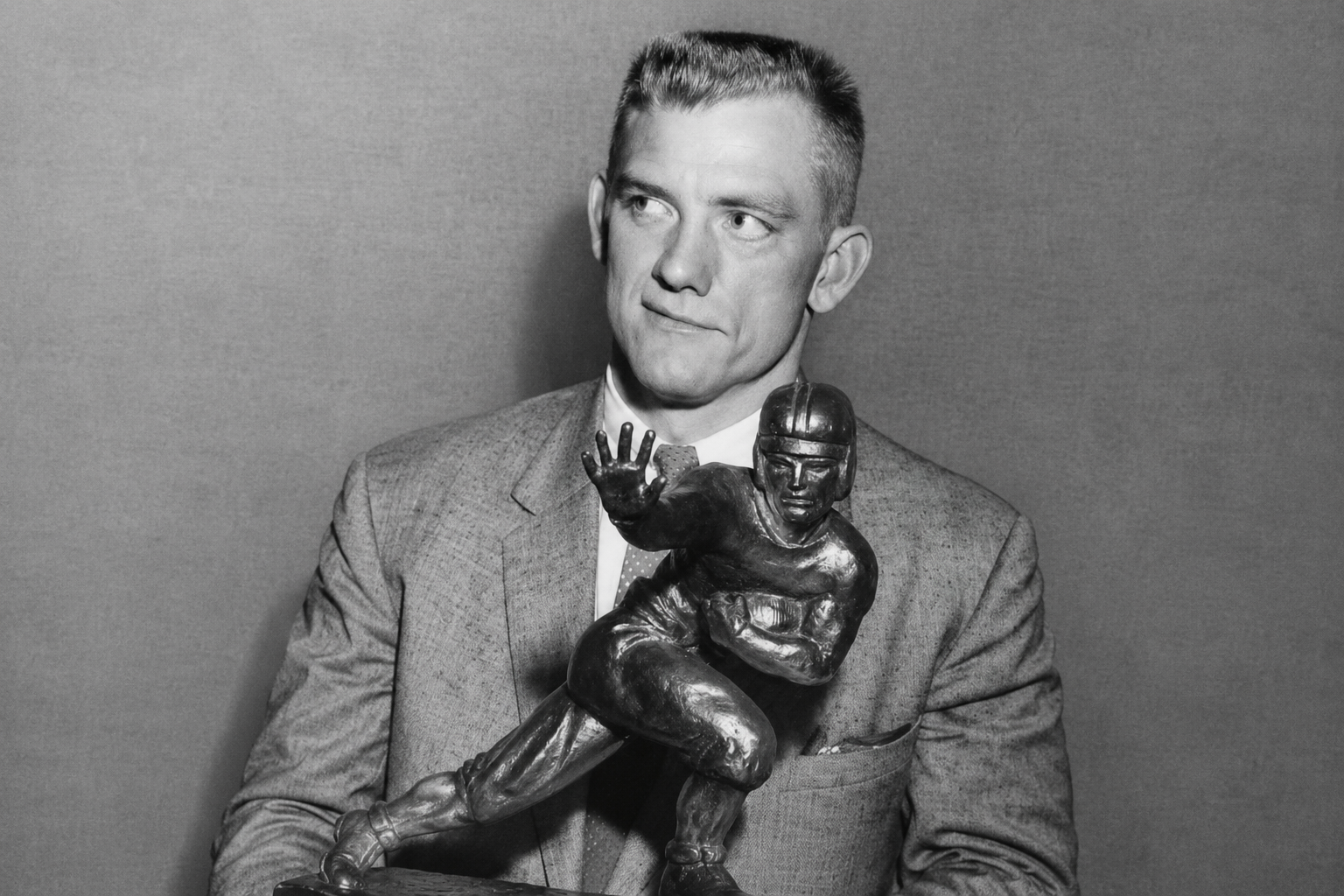
*ed. note: in time, the awarding of the Heisman Trophy
Leave a Reply